
What is Cotton Flannel Fabric?
When the autumn breeze turns into a winter chill, our textile preferences undergo a dramatic shift. We move away from the crisp, cool touch of percale and silk toward something more substantial, more forgiving, and infinitely more comforting. Enter cotton flannel, a material that has become synonymous with hearth, home, and heritage.
While many people use the term "flannel" to describe a plaid pattern, the true definition of flannel fabric lies in its mechanical finish. Specifically, cotton flannel is a soft, medium-weight woven flannel fabric that has been brushed to create a fuzzy, insulating texture known as a "nap." In this guide, we will dive deep into the world of this versatile material, exploring its construction, its benefits, and why it remains the go-to flannel fabric for clothing and bedding worldwide.
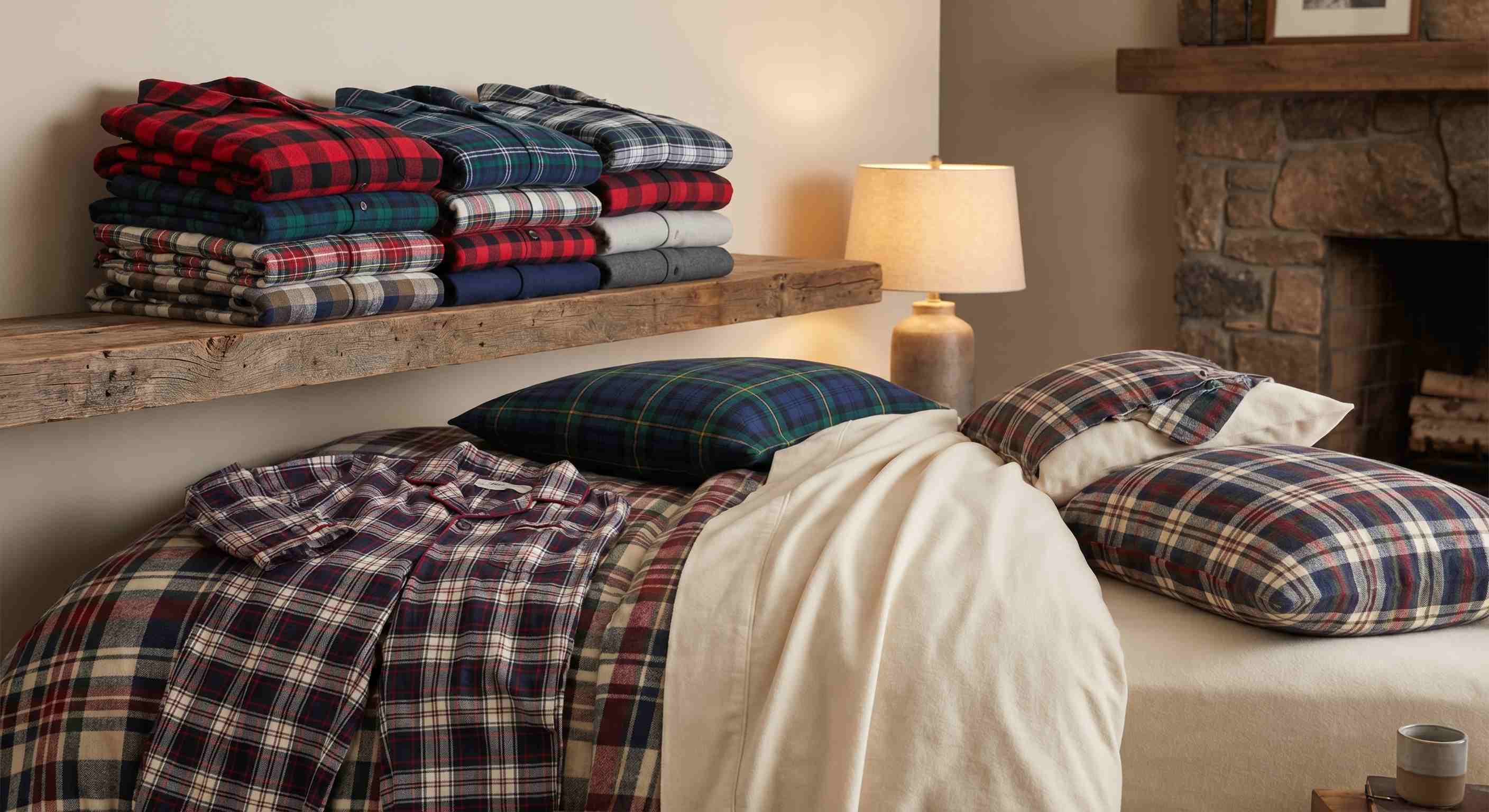
Defining Cotton Flannel: The Science of Softness
To understand cotton flannel, one must look beyond the surface. It is not merely a "thick cotton." The magic lies in the post-weaving process. Unlike standard cotton broadcloth or poplin, which are left with a smooth finish, flannel fabric undergoes a mechanical napping process.
The Napping Process
After the woven flannel fabric is produced on the loom, it is passed over rotating cylinders covered in fine metal wires or "teasels." These wires gently lift the loose fiber ends from the spun yarns. This "brushing" creates a downy surface on one or both sides of the cloth. This isn't just for tactile pleasure; the lifted fibers trap tiny pockets of air, creating a natural layer of thermal insulation that makes flannel fabric significantly warmer than its non-brushed counterparts.
Carded vs. Combed Cotton
The quality of cotton flannel depends heavily on the preparation of the yarn.
Carded Cotton: Traditionally, flannel fabric is made from carded cotton. Carding aligns the fibers but leaves shorter, stray fibers in the mix. While this might sound like a flaw, it is actually a feature for flannel. These shorter fibers are easily lifted during napping, resulting in a richer, plusher surface.
Combed Cotton: While rare, some high-end flannel fabric for clothing uses combed cotton. This results in a stronger, more durable fabric with less pilling, though the nap may feel slightly less "fuzzy" than carded versions.
The Manufacturing of Woven Flannel Fabric
The construction of a high-quality woven flannel fabric usually follows one of two paths: the plain weave or the twill weave.
1. Plain Weave Flannel
This is the most common construction for lightweight cotton flannel. It uses a simple over-under pattern. Because of its simplicity, it is highly breathable and cost-effective, making it a favorite for children’s sleepwear and summer-weight flannel fabric for clothing.
2. Twill Weave Flannel
Heavier, more durable flannel fabric often utilizes a twill weave, recognizable by its diagonal ribbing. This construction allows for a denser thread count, which in turn permits a deeper, more luxurious nap. If you are looking for a rugged "lumberjack" shirt or heavy winter sheets, you are likely looking at a twill-based woven flannel fabric.
Key Characteristics of Cotton Flannel Fabric
Why has flannel fabric remained a staple for centuries? Its popularity is rooted in a unique combination of physical properties that few other textiles can replicate.
Exceptional Warmth-to-Weight Ratio
Despite its ability to trap heat, cotton flannel is not inherently heavy. Because the warmth comes from the trapped air in the nap rather than the density of the fiber alone, you can enjoy significant warmth without the "weighted down" feeling of heavy wool. This makes it an ideal flannel fabric for clothing designed for layering.
Superior Breathability
Unlike synthetic fleece or polyester-blend flannel fabric, 100% cotton flannel is a natural, breathable material. It allows air to circulate, which prevents the "greenhouse effect" of trapping too much sweat against the skin. This balance of insulation and ventilation is why it is the preferred flannel fabric for clothing for those with active outdoor lifestyles.
Moisture Management
Cotton is naturally hydrophilic, meaning it absorbs moisture. In a woven flannel fabric, this property is enhanced by the increased surface area of the nap. It pulls perspiration away from the body, keeping the wearer dry and comfortable even during physical exertion.
Cotton Flannel vs. Synthetic Flannel: Why Natural Wins
In the modern market, you will often find "flannel" made from polyester or microfiber. While these may feel soft in the store, they lack the structural integrity of a true woven flannel fabric.
Feature | 100% Cotton Flannel | Synthetic "Flannel" |
Breathability | High - Natural airflow | Low - Traps heat and sweat |
Static Build-up | None | High - Prone to shocks |
Longevity | Increases with proper care | Prone to "pilling" and thinning |
Skin Sensitivity | Hypoallergenic | May irritate sensitive skin |
For those prioritizing health and comfort, a 100% cotton flannel is almost always the superior choice, especially when selecting flannel fabric for clothing that sits directly against the skin.
Modern Applications: Flannel Fabric for Clothing and Beyond
The versatility of flannel fabric means it has found a home in almost every corner of the textile industry.
The Iconic Flannel Shirt
Often called the "Lumberjack tuxedo," the flannel shirt is a cultural icon. Modern designers have taken this flannel fabric for clothing and elevated it, moving beyond the classic red-and-black buffalo check into sophisticated solids and intricate heathered patterns. It serves as a rugged outer layer in the fall and a soft mid-layer in the winter.
Luxury Bedding
There is no feeling quite like sliding into cotton flannel sheets on a freezing night. Because the fabric is brushed, it doesn't have that "initial cold shock" that silk or sateen sheets provide. A high-GSM (grams per square meter) woven flannel fabric can turn a bed into a sanctuary of warmth.
Baby Gear and Sensitive Wear
Because of its softness and hypoallergenic nature, flannel fabric is widely used for receiving blankets, reusable diapers, and infant sleepwear. It provides the necessary warmth for newborns without the risk of skin abrasion.
Caring for Your Cotton Flannel
To maintain the "loft" of your woven flannel fabric, proper maintenance is crucial. If handled incorrectly, the nap can flatten, and the fabric can lose its insulating properties.
Wash in Cold Water: Heat is the enemy of cotton fibers. Cold water prevents the flannel fabric from shrinking and helps preserve the integrity of the nap.
Avoid Fabric Softeners: This may sound counterintuitive, but chemical softeners can actually coat the fibers, causing them to mat down and lose their "fuzzy" effectiveness.
Low Heat Drying: If possible, air-dry your flannel fabric for clothing. If you must use a dryer, use the lowest heat setting and remove the items while they are still slightly damp to prevent over-drying and pilling.
Conclusion: Why Material Knowledge Matters for Flannel Buyers
In an era of fast fashion, where "flannel" is often used as a marketing buzzword for any plaid shirt, understanding the technical reality of flannel fabric is a superpower for the consumer. When you know that the value of a woven flannel fabric lies in its napping process, the quality of its carded cotton, and the integrity of its weave, you can make better long-term investments.
Whether you are sourcing flannel fabric for clothing to withstand a mountain winter or simply looking for the softest sheets for your guest room, prioritizing 100% cotton and a high-quality brushed finish ensures you are getting the true benefits of this textile. Flannel fabric is more than just a seasonal trend; it is a masterclass in functional design, proving that sometimes, the simplest mechanical processes—like a little bit of brushing—can yield the most profound comfort.