What is Denim Fabric?
Few textiles in human history have managed to capture the cultural zeitgeist as effectively as Denim fabric. From the dusty gold mines of the 19th-century American West to the high-fashion runways of Milan and Paris, this rugged material has transitioned from a purely utilitarian cloth to a global symbol of rebellion, youth, and timeless style. But beyond the iconic blue jeans in your closet, what is the technical essence of this material? To understand its longevity, we must dive into the specific Twill weave and the unique Indigo dyeing process that makes Denim fabric a category of its own.
Defining Denim: More Than Just Blue Fabric
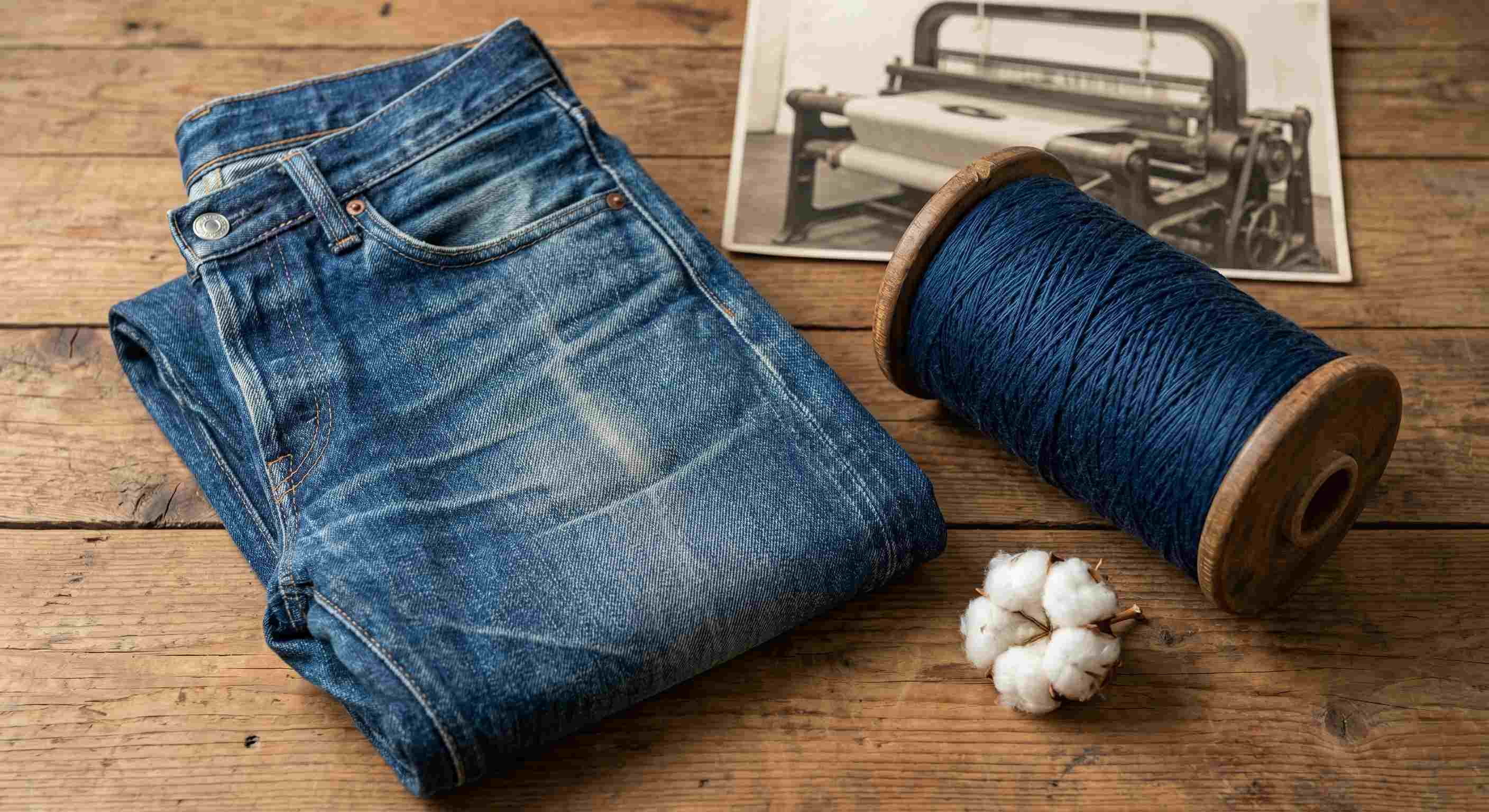
At its core, Denim fabric is a sturdy cotton warp-faced textile. While it is often grouped with other cotton cloths, its structural engineering is what provides its legendary strength and distinctive appearance.
Understanding the Twill Weave: The Secret Behind the Diagonal Ribbing
The most recognizable feature of Denim fabric is the diagonal ribbing on its surface. This is the result of a Twill weave. Unlike a plain weave, where the warp and weft threads cross in a simple one-over-one-under pattern, the Twill weave involves the warp thread passing over two or more weft threads. This creates a diagonal pattern (wale) that not only adds visual interest but also significantly increases the Durability and tear resistance of the Denim fabric.
The "Warp-Faced" Secret: Why Denim is Blue and White
If you look closely at your jeans, the outside is blue while the inside is significantly lighter or white. This is because Denim fabric is "warp-faced." During the weaving process, only the warp (vertical) yarns are subjected to Indigo dyeing, while the weft (horizontal) yarns are left in their natural white or "greige" state. Because the Twill weave pushes more warp threads to the surface, the blue color dominates the face of the fabric.
Material Composition: Organic Cotton to Stretch Denim
While traditional Denim fabric was made from 100% cotton, modern needs have led to diverse compositions. We now see a massive rise in Sustainable denim made from organic cotton to reduce pesticide use. Furthermore, the introduction of elastane gave birth to Stretch denim, a variation that offers the classic look of denim with the flexibility of modern activewear.
The Heritage of Denim: From Nîmes to the Wild West
The history of Denim fabric is a fascinating etymological journey across Europe and into America.
The Etymology: From "Serge de Nîmes" to "Genoa"
The word "Denim" is a contraction of the French phrase Serge de Nîmes, referring to a sturdy fabric produced in the city of Nîmes. Similarly, the word "jeans" comes from the French word for Genoa (Gênes), Italy, where sailors wore sturdy cotton trousers.
Levi Strauss and the Birth of a Phenomenon
In 1873, Levi Strauss and Jacob Davis patented the process of using copper rivets to reinforce stress points on cotton trousers. They chose Denim fabric for its unparalleled Durability. Originally intended for miners and laborers who needed clothing that wouldn't rip under extreme pressure, this choice eventually turned Denim fabric into the most popular textile in the world.
How Denim Fabric is Made: The Craftsmanship Behind the Indigo
The production of Denim fabric is a blend of heavy industrial power and delicate chemical artistry.
Step 1: Spinning the Yarn
The process begins with spinning cotton into yarn. High-quality Denim fabric often uses ring-spun yarn, which creates a slightly irregular texture known as Slub denim. This "slubby" texture is highly prized by enthusiasts as it creates unique fading patterns over time.
Step 2: Indigo Dyeing
Indigo dyeing is perhaps the most critical stage. Indigo is a "living" dye that doesn't fully penetrate the fiber, which is why jeans fade. Most Denim fabric is dyed via "rope dyeing," where yarns are twisted into ropes and dipped into indigo vats multiple times.
Step 3: Weaving and the Shuttle Loom
Traditional Selvedge denim is woven on old-fashioned shuttle looms. These looms create a self-finished edge (self-edge) that prevents fraying. While modern projectile looms are faster, Selvedge denim remains the gold standard for those seeking heritage quality in their Denim fabric.
Step 4: Finishing and Sanforization
To prevent extreme shrinkage, most Denim fabric undergoes "Sanforization," a mechanical stretching and shrinking process. However, purists often prefer Raw denim (Dry denim), which skips this stage, allowing the wearer to shrink the fabric to their own body shape.
Key Properties and Characteristics of High-Quality Denim
Durability
The primary reason Denim fabric has lasted centuries is its sheer toughness. The dense Twill weave ensures that even under heavy friction, the fabric remains intact.
Breathability
Despite its thickness, 100% cotton Denim fabric offers surprising air permeability. However, as you move toward Stretch denim with higher synthetic content, the breathability can decrease slightly.
The Patina
Unlike other fabrics that look "worn out" when they age, Denim fabric creates a "patina." As the Indigo dyeing wears off through friction, it creates personalized highlights and fades that tell the story of the wearer.
Exploring the Varieties of Denim
Raw vs. Sanforized Denim
Raw denim (Dry denim) is fabric in its purest form—unwashed and stiff. It is the canvas for the ultimate personalized fade. Sanforized Denim fabric is the "user-friendly" version that won't shrink 10% after the first wash.
Selvedge Denim
Selvedge denim is easily identified by the clean, woven tape on the inside of the outseam. It represents a slower, more deliberate form of production that emphasizes Durability.
Stretch Denim
By blending cotton with elastane, Stretch denim solved the "comfort" problem. It allows for skinny fits that were impossible with rigid Denim fabric.
Acid Wash & Stonewashed
These are mechanical and chemical finishes used to mimic the look of years of wear in a matter of hours. While popular, they are often less eco-friendly than Sustainable denim practices.
Denim vs. Standard Cotton: What’s the Difference?
While both come from the same plant, Denim fabric is defined by its Twill weave, whereas standard cotton is often a plain weave. Additionally, the Indigo dyeing of only the warp threads is unique to denim. Furthermore, Denim fabric is measured in ounces (Oz). A standard cotton shirt might be 4oz, while a heavyweight Denim fabric can reach 21oz or more, offering a level of protection that standard cotton cannot match.
Modern Applications: Beyond Jeans
Today, Denim fabric is used in everything from high-fashion jackets and durable tote bags to industrial upholstery. Its ruggedness makes it a favorite for soft furnishings that need to withstand pets and children.
The Environmental Impact: Moving Toward Sustainable Denim
Traditional Indigo dyeing and cotton farming are water-intensive. However, the industry is shifting. Sustainable denim now utilizes recycled cotton and waterless dyeing techniques. Laser distressing has replaced harmful chemical washes, making Denim fabric a leader in the circular fashion movement.
Care and Maintenance
To preserve the Indigo dyeing and the Durability of your Denim fabric, many experts recommend the "No-Wash" movement—or at least washing very infrequently in cold water. This maintains the fabric density and prevents premature fading of your Raw denim (Dry denim).
Conclusion: Why Denim Fabric Remains a Timeless Classic
From its roots in the Twill weave of Nîmes to the modern innovations of Sustainable denim and Recycled cotton, Denim fabric has proven itself to be the most resilient textile in existence. It is a material that rewards the wearer, evolving from a stiff blue cloth into a second skin. Whether you prefer the rugged edge of Selvedge denim, the comfort of Stretch denim, or the unique texture of Slub denim, there is no denying that Denim fabric is the ultimate intersection of history, utility, and art.