
Is 100% Linen Fabric Better Than Cotton Fabric for Clothing?
When choosing fabrics for clothing, two popular natural options often come up: linen and cotton. Both are comfortable and widely used, but they perform differently in hot weather, moisture control, durability, sustainability, and day-to-day care.
In this article, we compare 100% linen fabric and cotton fabric across the key factors that matter for clothing, so you can choose the best option for your needs.
What Are Linen Fabric and Cotton Fabric?
What Is Linen Fabric?
Linen is made from the flax plant. Producing linen typically involves harvesting flax, extracting the fibers, and spinning them into yarn. Linen is known for:
Excellent breathability
Strong moisture-wicking (helps sweat evaporate faster)
A crisp, airy feel that works well in hot and humid climates
Natural resistance to odors and microbial buildup (often described as naturally antibacterial)
Because flax fibers are long and strong, linen clothing is usually durable and can become softer over time with repeated washing.
What Is Cotton Fabric?
Cotton is made from the fibers of the cotton plant. It is popular because it is:
Soft and comfortable against the skin
Versatile for many clothing categories and everyday basics
Easy to dye and finish in different styles
Cotton is breathable, but it tends to absorb moisture and may feel damp longer than linen in very hot or humid conditions.
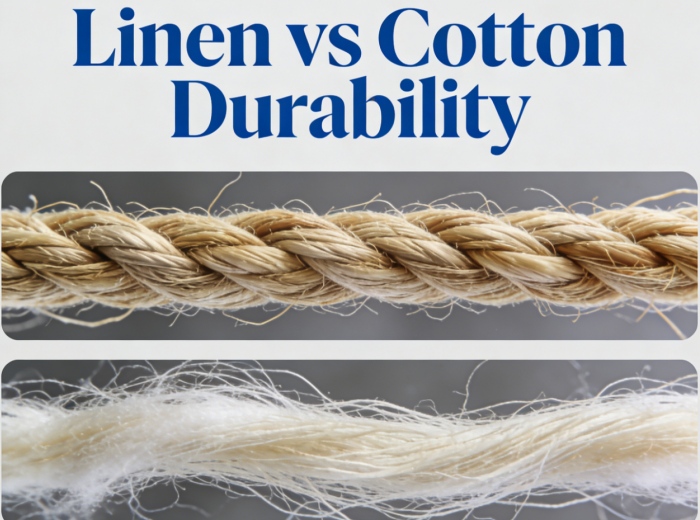
Durability Comparison: Is Linen More Long-Lasting Than Cotton?
Linen’s Strength Over Time
In general, linen fibers are stronger than cotton fibers, so linen garments often stay durable through frequent wear and washing. Linen may feel crisp at first, but it usually becomes softer and more comfortable over time while maintaining good strength.
Resistance to Moisture and Odor
Linen tends to dry faster and can reduce moisture buildup, which helps it feel fresher in warm conditions. Cotton can hold moisture longer, and when it stays damp for extended periods, odor may develop more easily.
Note: Performance also depends on weave structure, yarn quality, finishing, and garment construction—not only the fiber itself.
Breathability in Hot Weather: Does Linen Keep You Cooler Than Cotton?
Linen’s Moisture-Wicking Advantage
In hot climates, linen is often preferred because air circulates easily and sweat evaporates faster. This makes linen a common choice for summer shirts, dresses, and resort wear.
Cotton Comfort in Humid Conditions
Cotton is still breathable, but it usually holds moisture longer. In high humidity, cotton can feel sticky compared with linen.
Very hot/humid weather: linen usually performs better
Mild heat or indoor wear: cotton can be equally comfortable
Sustainability: Is Linen More Eco-Friendly Than Cotton?
Why Linen Is Often Considered More Sustainable
Flax (used for linen) typically requires less water and often fewer pesticides than conventional cotton in many regions. Flax is also a hardy crop that can grow in relatively poor soil.
Cotton’s Environmental Footprint (General View)
Conventional cotton farming is often associated with higher water use and chemical inputs. However, responsibly sourced cotton—such as organic cotton and certified supply chains—can reduce the environmental impact significantly.
Care & Maintenance: Is Linen Easier to Care for Than Cotton?
Does Linen Shrink?
Linen can shrink if exposed to high heat (hot wash or high dryer settings), especially if not pre-washed. With correct care—cool to warm wash and low heat or air-dry—shrinkage is usually manageable.
Wrinkling: Linen vs Cotton
Linen wrinkles more easily, which is part of its natural relaxed look. Cotton can also wrinkle, but many cotton fabrics are finished to reduce it.
Linen: more wrinkles, very breathable, durable
Cotton: soft feel, easy to wear, quality varies by fabric grade and finishing
Price vs Quality: Does Linen Offer Better Value Than Cotton?
Long-Term Value
Linen garments often cost more upfront, but they can deliver strong long-term value because they are durable and perform well in hot weather. Cotton clothing is usually more affordable, making it great for basics and daily wear, but cheaper cotton garments may lose shape faster depending on quality.
Linen: higher initial cost, strong long-term value
Cotton: lower cost, comfortable and versatile
Conclusion: Which Is Better—100% Linen or Cotton?
100% linen fabric is often the better choice for hot and humid climates, thanks to its breathability, moisture management, and durability. Cotton fabric remains an excellent option for everyday comfort, softness, and versatility—especially in moderate climates and year-round basics.
Choose linen for summer, humidity, travel, and airy comfort
Choose cotton for softness, everyday wear, and easy styling
FAQs
1) Does linen keep you cooler than cotton in hot weather?
Yes. Linen is typically more breathable and dries faster, making it a strong option for hot and humid climates.
2) Is linen more durable than cotton?
In many cases, yes. Linen fibers are generally stronger and can handle repeated wear and washing well.
3) Does linen have antibacterial properties?
Linen is often described as naturally resistant to odor and microbial buildup, which can help it feel fresher in warm conditions.
4) Is linen more sustainable than cotton?
Often yes, because flax typically requires less water and fewer pesticides. However, sustainably sourced cotton (such as organic cotton) can also be a good option.
5) Is linen easier to maintain than cotton?
Linen is durable but wrinkles more easily and should be washed with gentle heat settings to reduce shrinkage. Cotton is often easier to keep smooth, depending on fabric finishing.