
Is 100% polyester a woven fabric?
When shopping for clothing, upholstery, or crafting materials, reading the care label is usually the first step to understanding what you are buying. Often, you will come across a tag that reads "100% polyester," leading to a very common and highly searched question: Is 100% polyester a woven fabric? The confusion stems from mixing up the material's ingredients with the way the material is physically put together. In the textile industry, understanding the difference between the fiber content and the ultimate fabric construction is crucial for making the right purchasing decisions. In this comprehensive guide, we will decode the terminology, explore how a 100% polyester woven fabric is made, and examine why this specific woven fabric dominates so many different industries.
The Short Answer: Material Content vs. Fabric Construction
Addressing the core question directly: No, "100% polyester" does not automatically mean the material is a woven fabric. The term "100% polyester" dictates the ingredients (the synthetic polymer made from petroleum-based products), not the recipe (how it's put together). To put it simply, polyester is the what, and weaving is the how.
It is essential to understand that 100% polyester can be crafted into a woven fabric, a knit fabric, or even a non-woven fabric (like felt). Therefore, while a 100% polyester woven fabric is incredibly common, the fiber content label alone does not guarantee a woven fabric construction.
What Exactly is 100% Polyester Woven Fabric?
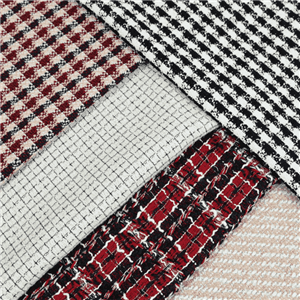
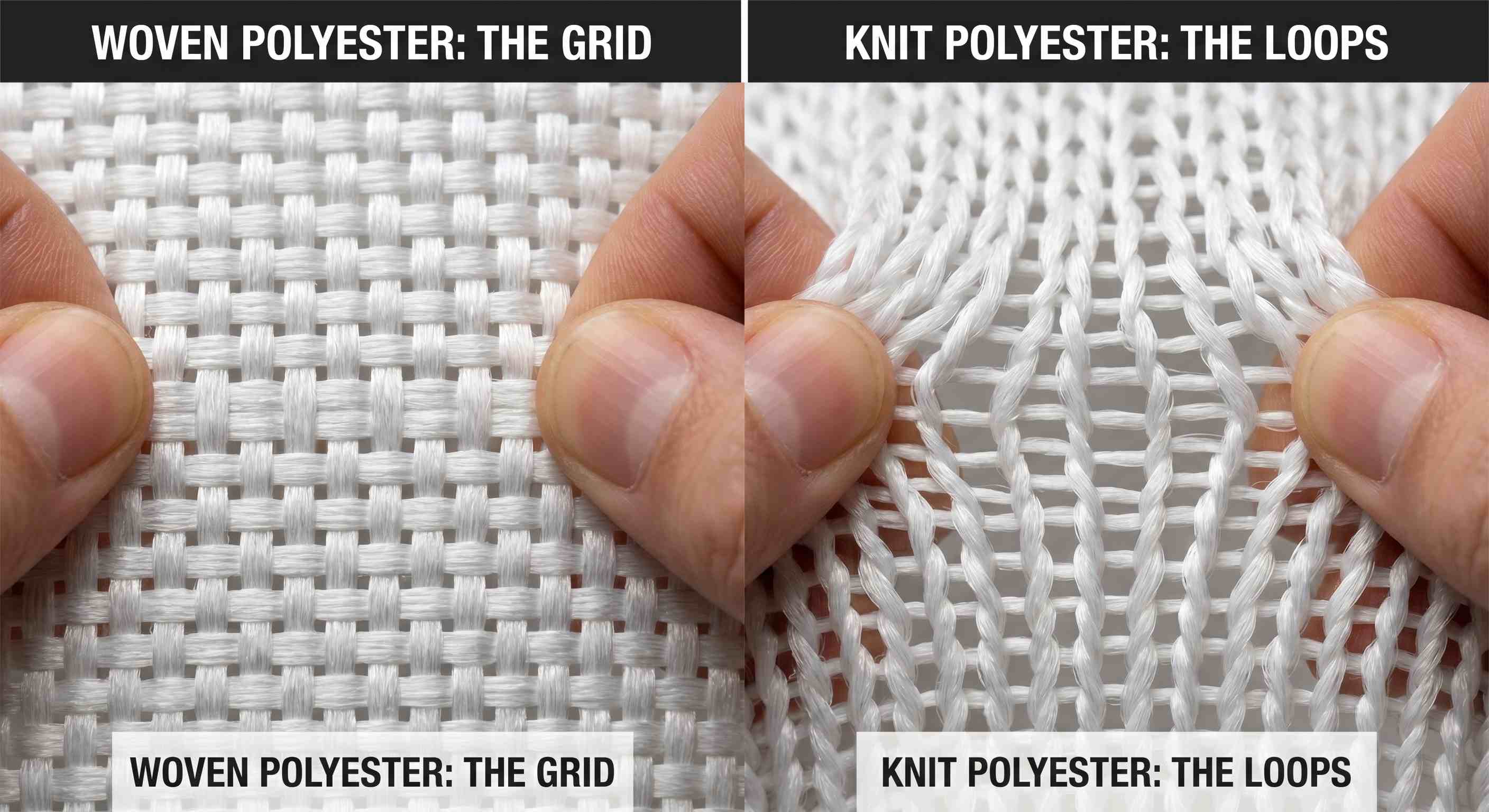
When we talk about a 100% polyester woven fabric, we are defining the grid structure: the intersection of warp and weft polyester yarns at 90-degree angles. This meticulous interlacing creates a stable, flat surface.
Why do manufacturers choose to weave polyester? The primary reason is to maximize dimensional stability and overall durability. A woven fabric made of pure polyester creates a structural grid that refuses to warp, sag, or permanently stretch out of shape. By choosing this specific fabric construction, textile producers create a woven fabric that can withstand extreme wear and tear while maintaining its precise measurements and structural integrity.
Polyester Woven vs. Polyester Knit: How to Tell the Difference
Because 100% polyester can be both knitted and woven, consumers need to know how to identify a genuine woven fabric.
The Stretch Test: Why woven polyester is rigid and holds its shape, while polyester knit stretches (like a T-shirt or activewear). If you pull on a 100% polyester woven fabric, it will exhibit almost no give, highlighting its impressive dimensional stability. A knit, however, will easily stretch and bounce back.
The Visual Test: Looking for the grid-like pattern vs. interlocking loops. If you look closely at a woven fabric, you will see a checkerboard-like interlacing of threads. A knit will look like tiny braided rows or interlocking teardrops.
Choosing the right one for your project: If you need crisp lines and dimensional stability, choose a 100% polyester woven fabric. If you need elasticity and movement, opt for a knit.
The Manufacturing Journey: How Woven Polyester is Made
The creation of a 100% polyester woven fabric is a marvel of modern industrial engineering.
Step 1: Polymerization & Melt Spinning
The process begins by turning petroleum-derived chemicals into plastic pellets, then melting them into continuous synthetic fibers. This chemical reaction, called polymerization, creates a liquid that is forced through tiny spinnerets, cooling into long, solid strands of 100% polyester.
Step 2: Yarn Spinning
Next involves twisting the filaments to create strong yarn. These continuous synthetic strands are gathered and spun into durable threads, preparing them for the ultimate fabric construction phase.
Step 3: Loom Weaving
This is where the material officially becomes a woven fabric. The process involves feeding the yarn into industrial looms to interlace the warp and weft. The warp threads are held under high tension, while the weft threads are rapidly shot back and forth, building the rigid grid of the woven fabric.
Step 4: Finishing Processes
Finally, the newly created woven fabric undergoes heat-setting to prevent shrinkage and adding water-resistant or anti-static coatings. This finishing locks in the dimensional stability, ensuring the 100% polyester woven fabric behaves predictably.
Common Weave Types for 100% Polyester
Not every 100% polyester woven fabric looks the same. The loom can alter the fabric construction to achieve different textures and varying degrees of fabric drape.
Plain Weave
The crisp, durable over-under grid (e.g., polyester canvas, poplin). A plain weave 100% polyester woven fabric offers the highest dimensional stability and is incredibly durable, making it ideal for structured garments.
Twill Weave
The diagonal ribbing for heavier drape (e.g., polyester gabardine for uniform pants). This woven fabric structure allows the material to yield a much heavier, more luxurious fabric drape, perfect for high-quality outerwear that requires excellent movement.
Satin Weave
The luxurious, light-reflecting structure (e.g., poly-satin for evening dresses and linings). By floating the warp or weft threads over the surface, this 100% polyester woven fabric boasts a beautiful sheen and a highly fluid fabric drape.
Key Properties: The Pros and Cons of Woven Polyester
Evaluating a 100% polyester woven fabric means understanding both its immense strengths and its inherent limitations.
The Advantages:
Unmatched durability and tensile strength: A 100% polyester woven fabric is virtually indestructible under normal daily use, resisting tearing and abrasion.
High wrinkle resistance (The "wash-and-wear" hero): The combination of synthetic fibers and a woven fabric construction means this woven fabric rarely needs ironing.
Cost-effective and highly colorfast: This woven fabric holds artificial dyes brilliantly, ensuring that vibrant colors never fade, even after repeated washes.
The Disadvantages:
Lower breathability compared to natural fibers (like cotton or linen): While some advanced weaves are treated to be moisture-wicking, a basic 100% polyester woven fabric tends to trap heat.
Susceptibility to static cling and pilling: The synthetic nature of the woven fabric can generate static electricity in dry environments.
Top Applications: Where Will You Find 100% Woven Polyester?
Thanks to its versatility and high dimensional stability, 100% polyester woven fabric is utilized across numerous sectors.
Fashion & Apparel: Windbreakers, trench coats, blazers, and pleated skirts. The excellent fabric drape of a twill or satin woven fabric makes it indispensable for modern fashion designers.
Home Textiles: Durable upholstery, fade-resistant curtains, and tablecloths. Because this woven fabric is easily washed and highly resistant to sunlight, it protects the home beautifully.
Outdoor & Industrial Textiles: Backpacks, tents, and umbrellas (where weather resistance is key). In the realm of outdoor textiles, a tightly constructed 100% polyester woven fabric coated with waterproofing agents is the absolute gold standard. These outdoor textiles demand extreme strength, which only a robust woven fabric can provide.

Frequently Asked Questions (FAQs)
Is 100% polyester woven fabric stretchy?
No, unless elastane/spandex is added. The intrinsic grid layout of a woven fabric restricts stretching, which is why it maintains such fantastic dimensional stability.
Is 100% woven polyester good for summer?
Generally, a standard 100% polyester woven fabric is not ideal for extreme heat, explaining why it might trap heat compared to woven cotton. However, modern athletic variations utilize specialized moisture-wicking finishes to draw sweat away from the body, though these moisture-wicking features are more common in knits than in a standard woven fabric.
How do you wash and care for polyester woven fabric?
A 100% polyester woven fabric is incredibly low maintenance. Machine wash on a warm or cold cycle and tumble dry on low. The woven fabric will naturally resist shrinking and emerge practically wrinkle-free.
Conclusion: Making the Right Choice for Your Textile Needs
In conclusion, understanding the distinction between fiber and structure clears up the common confusion surrounding 100% polyester. While "100% polyester" identifies the raw, synthetic material, a woven fabric refers to the meticulous, intersecting grid pattern that gives the textile its life and function. By combining the resilience of synthetic polymers with a sturdy woven fabric construction, manufacturers produce a woven fabric that excels in dimensional stability, boasts an adaptable fabric drape, and rules the market in everything from high-fashion apparel to rugged outdoor textiles.
Whether you require a heavy-duty material for heavy outdoor textiles or a wrinkle-resistant, moisture-wicking layer for a uniform, a 100% polyester woven fabric remains one of the most reliable, cost-effective, and versatile choices in the global textile industry. Armed with this knowledge, you can now read clothing labels with total confidence, knowing exactly what to expect from your chosen woven fabric.