
What is Ticking Stripe Fabric?
When we discuss the most iconic and enduring materials in the world of interior design, few textiles can claim a history as functional and aesthetically versatile as ticking stripe fabric. Often recognized by its crisp, repeated vertical stripes and dense weave, this material has evolved from a humble utility cloth into a cornerstone of high-end home decor. Whether you are aiming for a rustic farmhouse look or a sophisticated coastal vibe, understanding the structural and stylistic nuances of this traditional textile is essential for any design project.
In this deep dive, we will explore the heritage of the ticking stripe, its unique construction, and why it remains a favorite for designers who value both beauty and durability.
The Origins of Ticking: Why it was Originally "Feather-Proof."
The story of the ticking stripe begins with a purely functional necessity. Long before it was used for aesthetic Roman blinds or decorative pillows, it was a heavy-duty workhorse of the bedroom.
The etymology: From the French tique and Greek theke
The term "ticking" is not merely a descriptive name for its pattern; it is rooted in its original purpose as a container. It originates from the French word tique and the Greek word theke, both of which translate to "case" or "cover." Historically, the primary role of this material was to serve as a mattress ticking—a sturdy encasement for the straw, hair, or feathers used to fill mattresses and pillows.
Its historical role as a heavy-duty mattress cover
In the centuries before synthetic foams, mattresses were filled with down and feathers. However, feathers have sharp quills that easily poke through loosely woven fabrics. To solve this, textile makers developed a high-density, woven stripes fabric that was virtually "feather-proof." Much like the way flannel fabric was engineered in Wales to provide thermal protection for farmers, the ticking cloth was engineered to provide a structural barrier for sleepers, ensuring that the filling stayed inside the mattress and away from the skin.
Defining Characteristics: What Makes it "Ticking Stripe"?
While many fabrics feature stripes, a true ticking stripe fabric is defined by a specific set of technical and visual markers that differentiate it from other classic stripes.
The Weave: Explaining the dense twill weave or herringbone weave
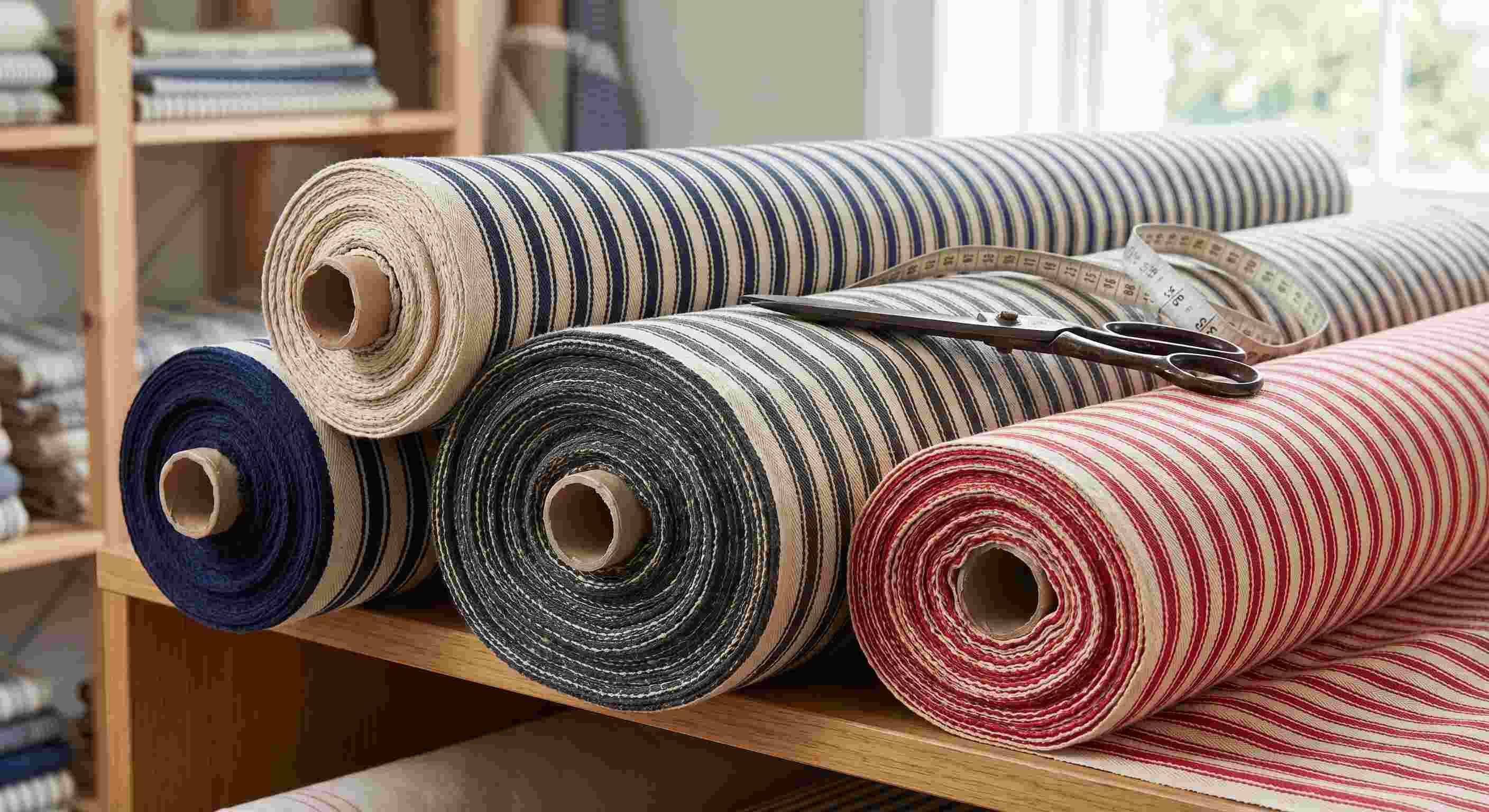
The secret to the "feather-proof" nature of this cloth lies in its construction. Traditionally, a ticking stripe is made using a very tight twill weave or a herringbone weave. In a twill weave, the threads are interlaced in a diagonal pattern, which creates a much denser and more robust textile than a standard plain weave. Sometimes, a herringbone weave is used to add even more structural integrity and a subtle V-shaped visual texture. This density is the opposite of the soft, lofted nap found in a flannel fabric, focusing instead on a smooth, impenetrable surface.
The Pattern: The classic "ticking stripe"
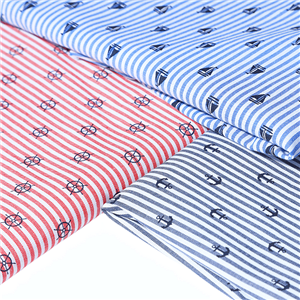
Visually, the classic stripes of ticking are highly specific. It traditionally features a primary, thicker center stripe flanked by two thinner lines on either side, though modern variations vary in scale. Usually presented in a neutral palette of cream and navy, charcoal, or red, these vertical stripes are always woven into the fabric rather than printed on the surface, ensuring that the design remains crisp even after decades of use.
The Texture: Why it feels sturdy, smooth, and incredibly durable
Because of its high thread count and specific weave, the fabric has a distinct hand-feel. It is incredibly smooth to the touch but possesses an undeniable durability. It lacks the "fuzzy" surface of a flannel fabric, offering instead a crispness that holds its shape beautifully over time. This makes it ideal for high-traffic applications where lesser fabrics might fray or pill.
Materials and Composition: Cotton, Linen, and Modern Blends
The material composition of a ticking stripe fabric determines its drape, breathability, and how it ages.
Traditional heavyweight cotton vs. breathable linen-cotton blends
Most heritage ticking is made from 100% heavyweight cotton. This provides the maximum durability and that classic, structured feel. However, modern luxury versions often utilize a linen-cotton blend. A linen-cotton blend offers a more relaxed drape and a slightly more textured surface, making it popular for high-end summer apparel and drapery where a bit of "movement" is desired.
Why is fabric density the key quality marker for ticking
Unlike a flannel fabric, which is often judged by its softness and "brushing," ticking is judged by its weight and density. A high-quality woven stripes fabric should feel substantial. When you hold it up to the light, you should see very little light passing through the weave; this density is what ensures the fabric won't stretch out of shape when used for upholstery.
Why Ticking Stripes are the MVP of Versatile Interior Design
One of the reasons designers return to this traditional textile year after year is its incredible adaptability.
The Neutral Appeal: How it acts as a "solid."
Despite being a pattern, the ticking stripe often functions as a neutral in a room. Because the stripes are usually thin and repetitive, they provide visual texture without overwhelming other design elements. In the same way that a solid gray flannel fabric acts as a foundational piece in a winter wardrobe, a neutral ticking stripe acts as a foundational piece in a living room.
Aesthetic Flexibility: From Farmhouse to Industrial Loft
The ticking stripe fabric is a stylistic chameleon
Modern Farmhouse: Pairs with reclaimed wood and white shiplap.
French Country: Offers a refined, rustic elegance in blue and cream.
Coastal Luxe: Mimics the lines of nautical sails and deck chairs.
Industrial Loft: Adds a touch of vintage "workwear" grit to metal and brick environments.
How to Style Ticking Stripe Fabric in Your Home Today
Upholstery & Furniture: A tailored, heritage look
If you want to give an old armchair or sofa a new life, a ticking stripe fabric is an excellent choice. The twill weave provides the necessary strength for daily sitting, and the vertical stripes can help elongate the silhouette of a piece of furniture, making it look taller and more elegant.
Window Treatments: Roman blinds and floor-length curtains
Because it is a woven stripes fabric, it looks beautiful when light filters through it (or when backed with a blackout lining). Roman blinds in ticking are a classic choice for kitchens and bathrooms, providing a clean, tailored look that feels much more permanent than printed alternatives.
Soft Furnishings: Toss pillows and table runners
For those not ready to commit to a full sofa, ticking is perfect for accents. It is more rugged than a delicate silk or a flannel fabric, making it ideal for high-use items like floor cushions, laundry bags, and table runners.
Pattern Mixing 101: What Goes Best with Ticking Stripes?
Mixing patterns is an art, and classic stripes are the perfect "entry-level" pattern for beginners.
Pairing with Florals: Masculine vs. Feminine
The structured, linear nature of vertical stripes provides a perfect counterpoint to the organic, flowing lines of floral prints. This balance is a staple of English Country design.
Pairing with Gingham or Solids
For a more cohesive look, you can layer ticking stripe fabric with gingham or solid linens. While flannel fabric often comes in bold, heavy plaids, ticking stays in its lane with its refined neutral palette, allowing you to create a sophisticated, layered textile story without clashing.
Ticking Stripe vs. Other Striped Fabrics
It is important to distinguish the ticking stripe from other common stripes:
Awning Stripes: Much wider and bolder, usually used for outdoor upholstery.
Pinstripe: Extremely thin, usually reserved for formal suiting.
Bengal Stripe: wider than ticking but narrower than awning, often found in shirting.
Ticking remains unique because of its twill weave and the specific "grouped" nature of its lines.
How to Choose High-Quality Ticking Fabric
When shopping for this traditional textile, always prioritize quality over price.
Woven vs. Printed: Why woven stripes are essential
A woven stripes fabric is always superior to a printed one. In a woven fabric, the color is part of the structure, meaning it won't fade or "rub off" at the seams. While a printed flannel fabric might be acceptable for a seasonal pajama set, a printed ticking stripe will quickly show wear on high-use furniture.
Checking the thread count and weight (GSM)
Look for a high GSM to ensure the fabric has the necessary body. A lightweight ticking might be fine for a summer shirt, but for home decor, you want a weight that feels substantial and durable.
Maintenance and Care: Keeping Your Classic Stripes Sharp
To preserve the durability and crisp look of your ticking:
Wash in Cool Water: To prevent significant shrinkage, especially with linen-cotton blend varieties.
Avoid Excessive Heat: Like a flannel fabric, high-heat drying can damage the fibers.
Iron While Damp: Ticking looks best when it is crisp and flat; ironing while slightly damp will help you achieve that professional, tailored finish.
Conclusion: The Enduring Appeal of a Centuries-Old Classic
The ticking stripe fabric has traveled an incredible distance from the interior of 18th-century mattresses to the pages of modern design magazines. Its success is rooted in its honest construction—a twill weave or herringbone weave that was designed to last a lifetime. While we may love flannel fabric for its seasonal softness, we respect and rely on the ticking stripe for its year-round durability and timeless style. Whether you are building a neutral palette for a new home or looking for a traditional textile that bridges the gap between old and new, the classic stripes of ticking remain an undefeated choice in the world of fabrics.